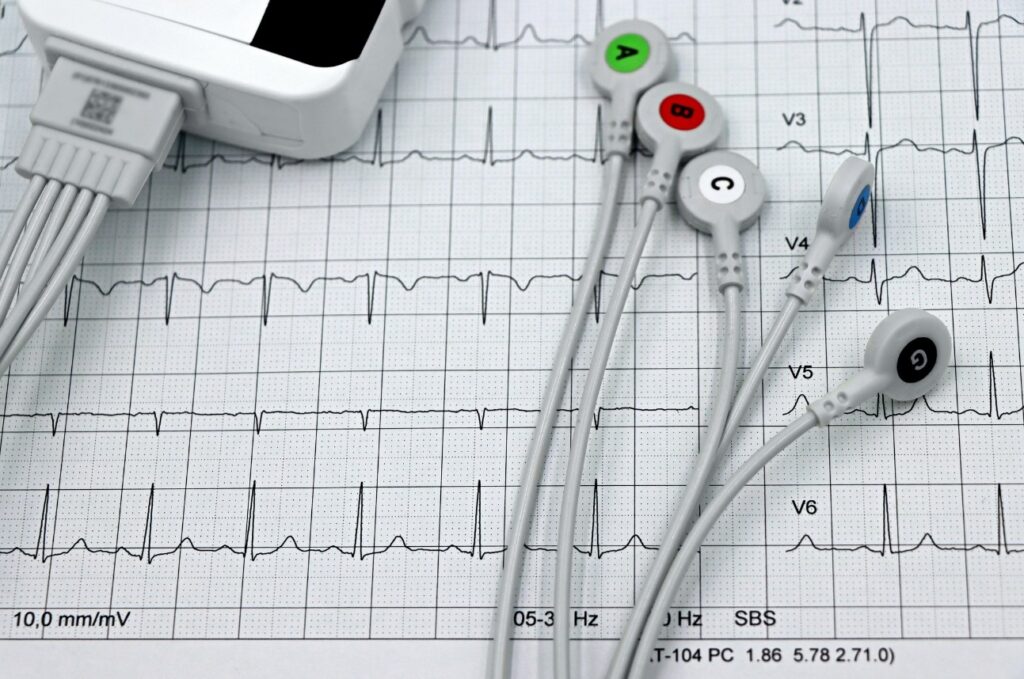
An electrocardiogram (ECG) is a commonly used medical tool to assess the electrical activity of the heart. This article explores its essential role in diagnosing heart conditions.
An electrocardiogram (ECG) is a medical test that measures the electrical activity of the heart and detects abnormalities. It is used to diagnose heart problems and monitor the functioning of the heart. An ECG is an essential tool for diagnosing conditions such as arrhythmia, heart rhythm disorders and heart disease.
An electrocardiogram (ECG) is a simple and painless test that provides essential information for diagnosing a heart disorder or heart condition. The test, also known by its abbreviation “ECG”, is quick to perform and requires no special preparation.
An electrocardiogram (ECG) is one of the simplest and quickest tests used to assess heart health. Electrodes (small metal sensors attached to adhesive pads placed directly on the skin) are positioned at specific locations on the chest, arms and sometimes legs. The electrodes are connected to an ECG machine by conductive wires. This device records the electrical activity of the heart, allowing the results to be interpreted and printed or transmitted digitally to the referring physician.
During an electrocardiogram (ECG), no electricity is delivered to the body. The test simply measures the electrical activity generated by the heart itself. Indeed, natural electrical impulses coordinate the contractions of the different parts of the heart to ensure proper blood circulation, particularly through the left ventricle.
An ECG records these electrical impulses to determine the heart rate (the number of heartbeats per minute), the heart rhythm (the way the ventricles contract), and the strength and timing of electrical impulses as they travel through the different areas of the heart.
Your doctor may have asked you to undergo an electrocardiogram (ECG) for several reasons: